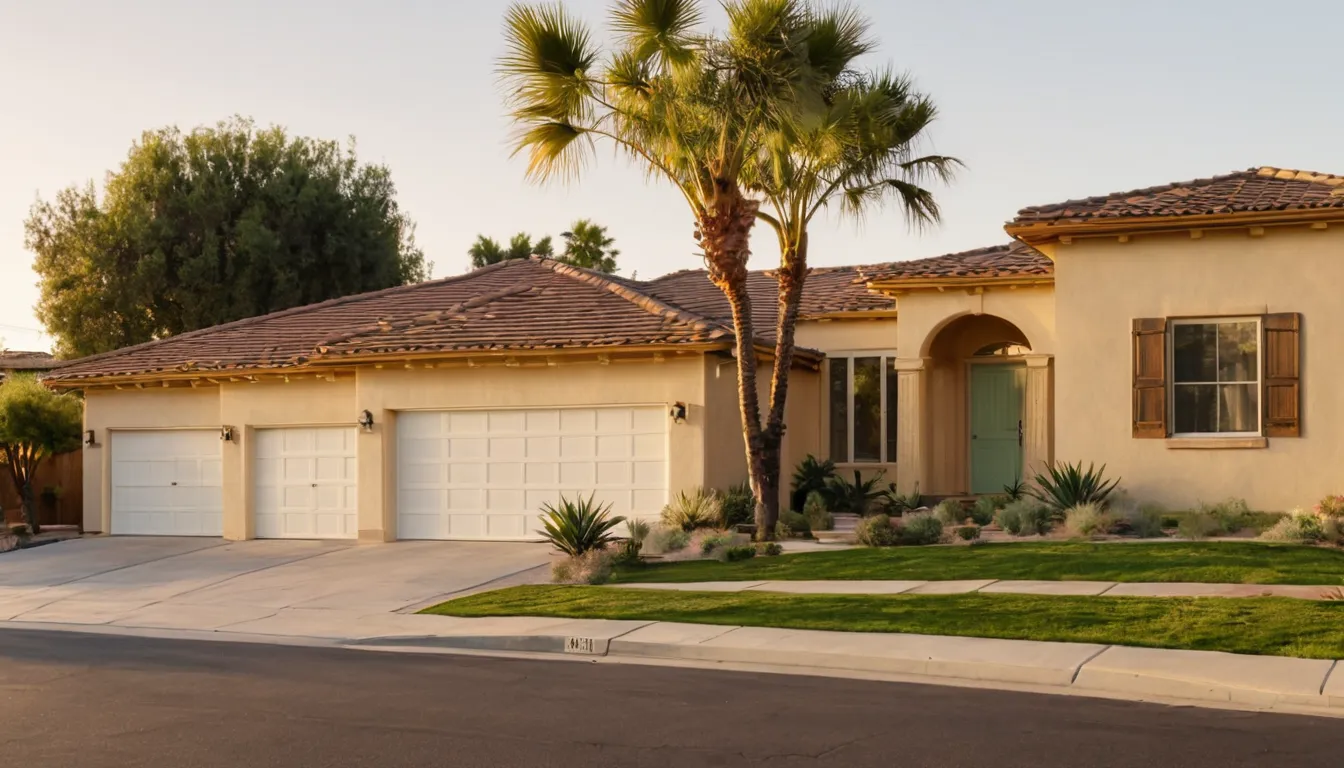
Need garage door spring repair in Rancho Cucamonga?
Describe the problem, add a photo if you can, and request an estimate. A provider in our network will follow up. Prefer talking? Request a callback to check provider availability.
No obligationRequest your spring estimate
Entrancefurthermore Garage Doors is a referral service. We pass your spring repair request to independent providers in our network. The providers do the work. Our job is to help you arrive at the estimate stage prepared, with clear photos, notes and questions.
A broken spring is a safety issue. The door can become too heavy to lift and may drop. This page explains how to spot a failed spring, what torsion and extension springs are, what a replacement visit includes, and how to judge a provider's answers. Ask before booking, and know the red flags.
The spring carries the weight of the door. When it breaks, the door gets very heavy and can fall without warning.
Keep people, pets and cars away from the door. Do not try to lift it by hand. Do not touch the spring, cables or bottom brackets. They hold stored tension.
If the door is stuck shut, do not run the opener. A strained motor can burn out. Some providers advertise emergency garage service, so ask what that means before you rely on it.
Look and listen for these:
Some of these also point to a track alignment problem or a worn opener. A provider can sort out which one on site.
Take photos before you request an estimate. Providers quote more accurately when they can see the problem.
Save everything with the date. Records like these also help if you talk to your insurer later.
A torsion spring is a coil on a bar above the door opening. It twists to lift the door. An extension spring runs along each side track and stretches as the door closes.
Many 1950s to 1980s tract homes have extension springs. Newer doors often use torsion. The type changes the parts, the labor and the price. Extension springs should have safety cables. Ask if yours do.
Spring work uses winding bars and high tension. A slipped bar can cause serious injury. A wrong-size spring leaves the door unbalanced and wears out the opener.
Providers carry matched springs and the right tools. Leave this repair to them.
A typical visit covers these steps:
Many providers replace both springs together, since the second one is usually close to failing. They may also check track alignment while the door is open.
One open and close is one cycle. Standard springs are often rated around 10,000 cycles. High-cycle springs are rated higher and cost more.
If your household uses the door many times a day, ask about high-cycle. Winter rain and coastal dampness can also rust springs and cables, so ask what finish the parts have.
Use these questions. Each comes with a good answer and a warning sign.
Good: the provider asks for measurements or photos, then names the type. Warning: a firm price with no questions.
Good: parts, labor and any service fee are listed separately. Warning: one vague number.
Good: a clear reason tied to your door. Warning: pressure to add extras you cannot see a need for.
Good: terms stated in writing. Warning: a verbal promise only.
Some policies may cover sudden damage. Normal wear usually is not covered. Check your policy. Providers can often help document damage for a claim. Keep your photos, notes and written quote together.
Send your request with photos and notes. Compare the answers you get, then decide. Providers set their own schedules, so ask about availability when you talk to them.
The provider confirms whether your door uses torsion or extension springs and measures for a matched replacement.
The broken spring is unwound and removed using proper winding tools and procedures.
The new spring is set so the door stays level when raised halfway.
Cables, track alignment and auto-reverse are checked before the visit ends.
These are typical U.S. ranges. Your job may fall outside them. Door size, spring type, brand and local rates all matter. Ask each provider for a written, itemized quote before you agree to work.
| Item | Typical range | Notes |
|---|---|---|
| Extension spring pair | $150 – $350 | Often includes safety cable check |
| Single torsion spring | $200 – $450 | Single-spring doors are less common |
| Torsion spring pair | $250 – $600 | Most common replacement job |
| High-cycle spring upgrade | $350 – $800 | Higher cycle rating, longer lifespan |
| Cable replacement add-on | $50 – $200 | Often needed when cables are frayed |
| Service or diagnostic fee | $50 – $150 | May be applied toward the repair |
Tell us what you heard and saw, and attach your photos of the spring area and door.
We pass it to independent providers in our network.
Review itemized quotes and the answers to your questions side by side.
Pick the provider you trust and confirm the visit details with them.
We connect you with independent providers. They do the work.
Photos, notes and questions in hand make estimates clearer and easier to compare.
Terms are explained once and used plainly, with sample answers to listen for.
You request, compare and choose. Nothing is required.
Describe the problem, add a photo if you can, and request an estimate. A provider in our network will follow up. Prefer talking? Request a callback to check provider availability.
No obligationCommon signs are a loud bang, a door that feels very heavy, an opener that strains, or a visible gap in the coil. Slack cables or a crooked door can also point to a failed spring.
It is risky. The door can be extremely heavy and may drop. Do not force it or run the opener. Keep clear and request an estimate from a provider instead.
Many providers replace both, since springs wear at a similar rate and the second may fail soon. Ask for the reason in writing and compare it with the quotes you receive.
Describe the problem, add a photo if you can, and request an estimate. A provider in our network will follow up. Prefer talking? Request a callback to check provider availability.
No obligation